2026
時序空間聲音裝置,紙箱,金屬框架,木板,揚聲器,功放,自編程式,田野錄音,多聲道音頻系統
Time-based spatial sound installation, cardboard boxes, metal frames, wooden boards, speakers, amplifiers, custom program, field recordings, multichannel audio system
《流 聲 部》是一件由 8 個分布在空間中的紙箱體組成的時序空間聲音裝置。每一個紙箱內部都置入一隻揚聲器,由電腦中的 Max/MSP 程式實時控制,構成一個 8 聲道的聲音生成系統。聲音並非從單一音箱中播放出來,而是在不同紙箱之間移動、分布、呼應和迴環,形成一片可步入、可貼近、也可被身體感知的聲學地形。
作品的聲音素材採樣於京東集團東莞「亞洲一號」智能物流園。流水線運轉、分揀、裝卸、打包、貨物移動、機器運行、現場廣播、工人之間的談話,以及物流園內部持續發生的環境聲,都被記錄下來,並通過程式拆解、重組、分配到 8 個紙箱聲部之中。對作者而言,這些聲音並不是單純的工業噪音,而是物流系統日常運作中真實存在的節奏:它們來自機器,也來自人;來自貨物的流動,也來自空間本身。

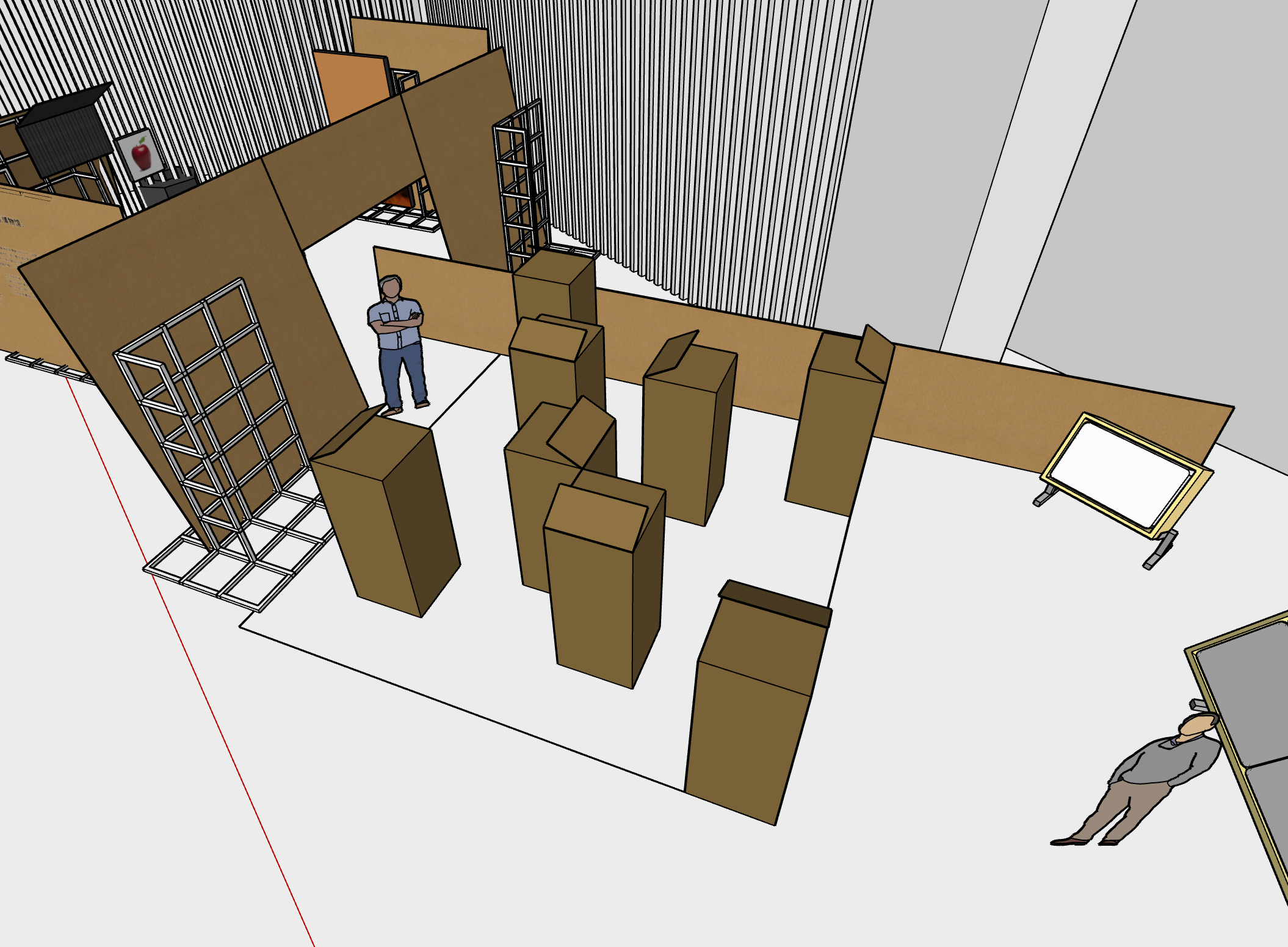
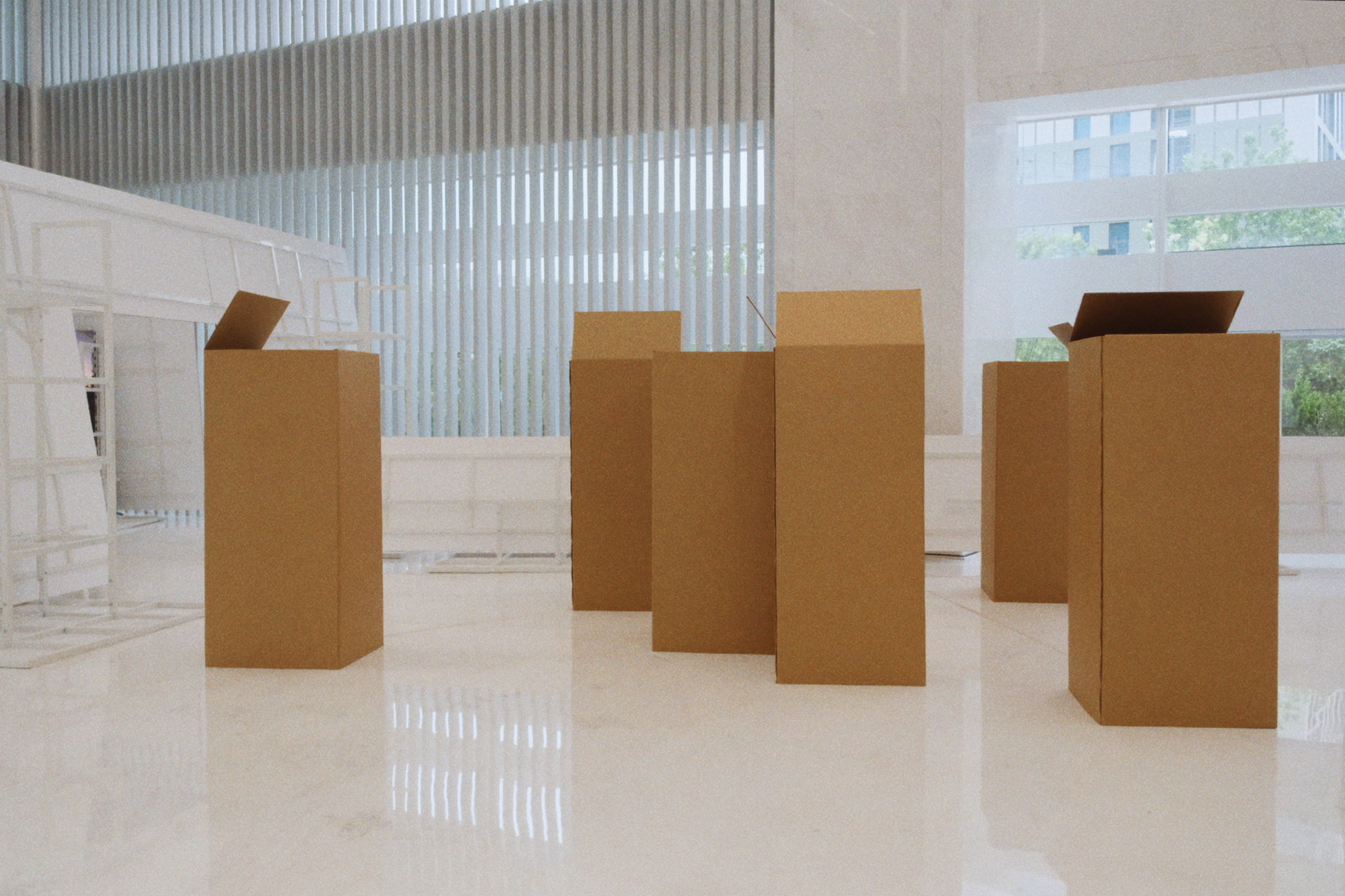
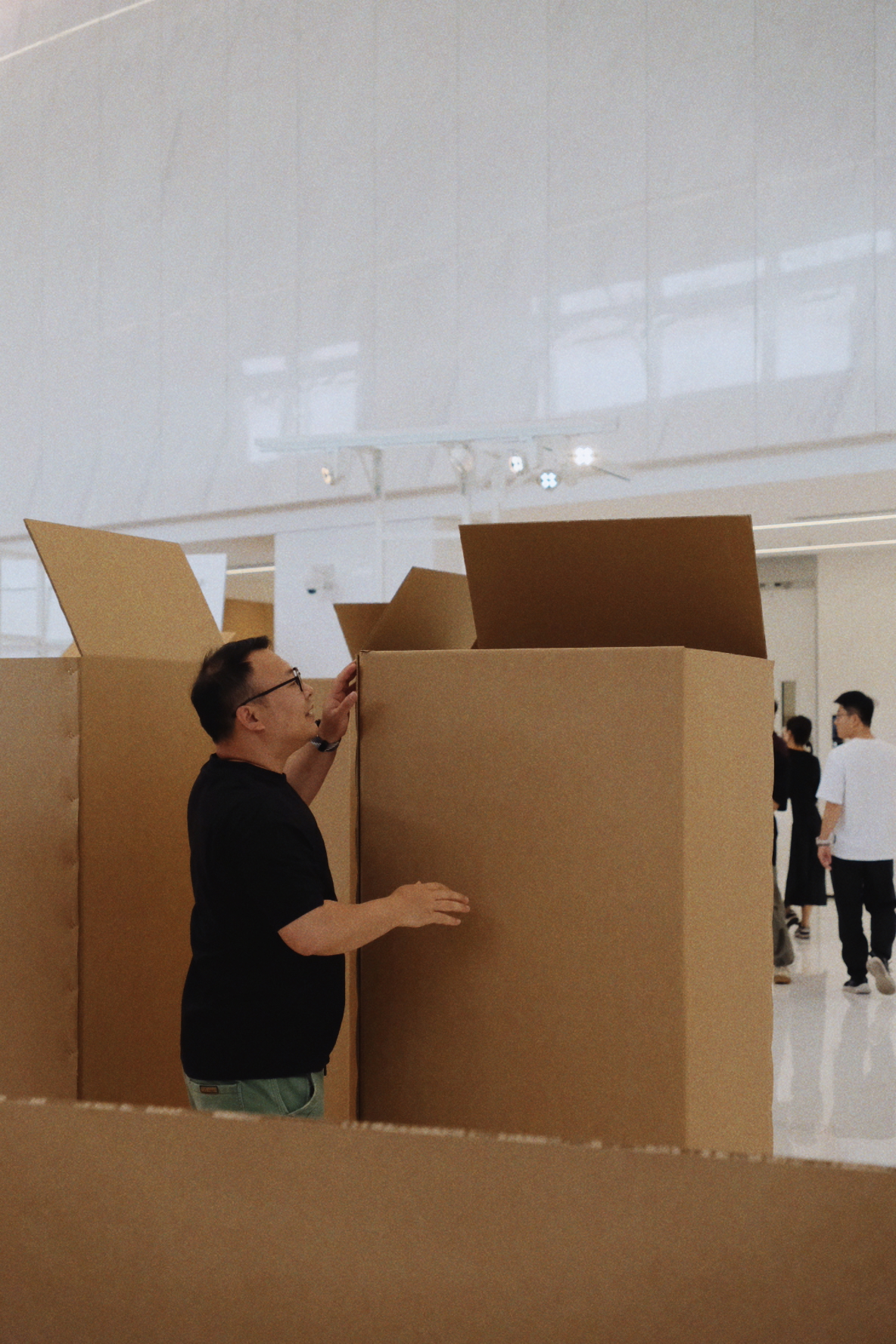 當觀眾進入裝置空間時,彷彿進入了一個被重新壓縮、過濾和重組後的物流中心。這裡沒有真實的流水線和大型機械,但聲音重新激活了作者在物流園現場的身體經驗:巨大的機械運轉、持續的分揀節奏、貨物流動的方向感,以及人在系統之中工作和交流的痕跡。某些聲音像貨物經過傳送帶,某些聲音像機器在遠處持續運行,另一些則在紙箱的包裹中變得低沉、模糊,並靠近身體。
紙箱在作品中既是結構,也是聲學介質。在物流體系裡,紙箱通常被理解為運輸、包裝和分類的工具;它短暫、功能性、隨時準備被搬運、堆疊、轉運或回收。但它同時也深度參與著物與資訊的組織方式。藝術家將紙箱從運輸容器轉化為聲景改造的介質:聲音從揚聲器發出後並不直接進入展廳,而是先進入紙箱,由箱體的尺寸、厚度、開口、摺疊方式、嵌套關係和內部空間改變其傳播路徑與質感。物流現場中大量中低頻的機械聲、震動聲和運轉聲,在箱體內部被遮蔽、反射、過濾、放大,並與紙板產生細微的物理共振。
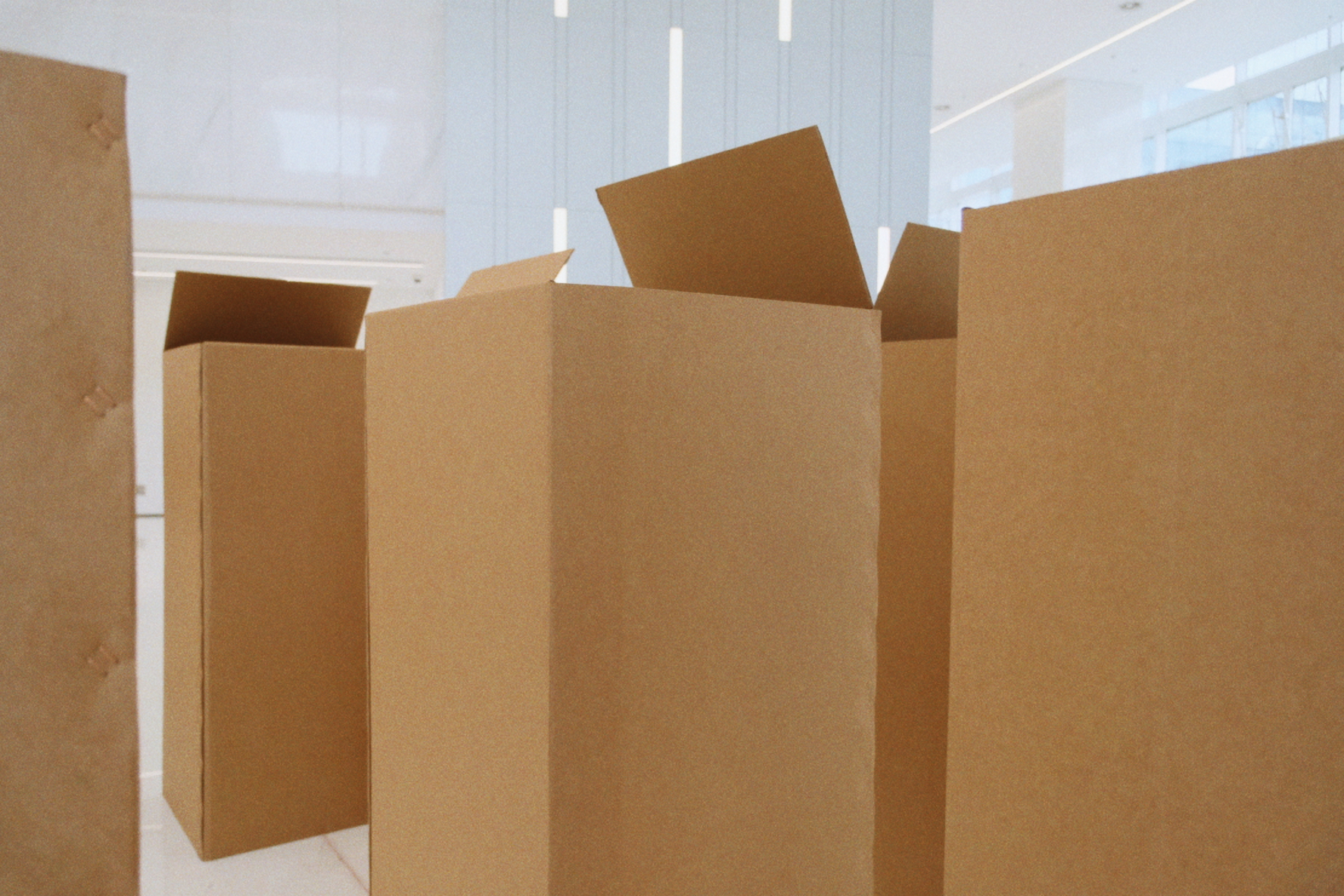
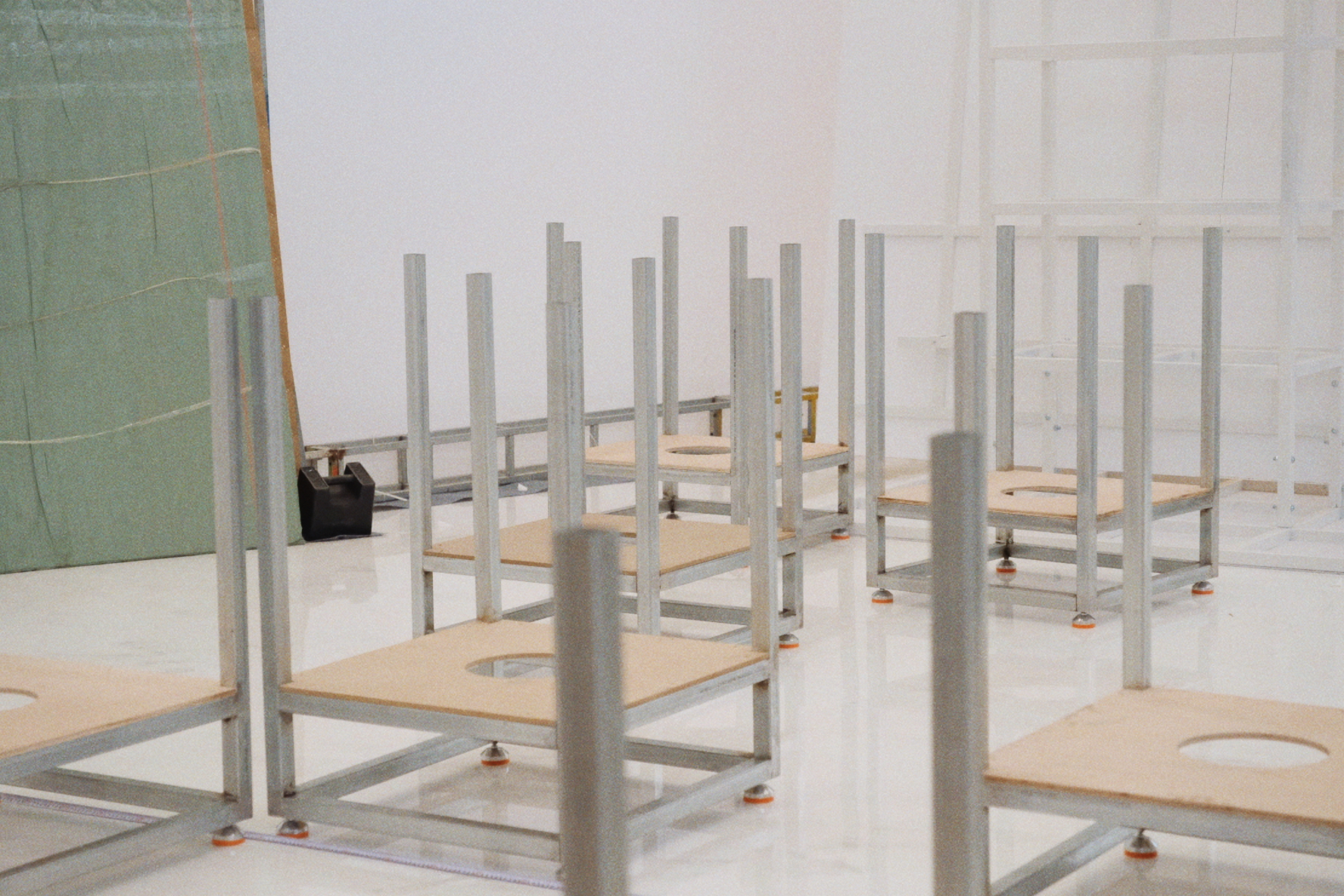
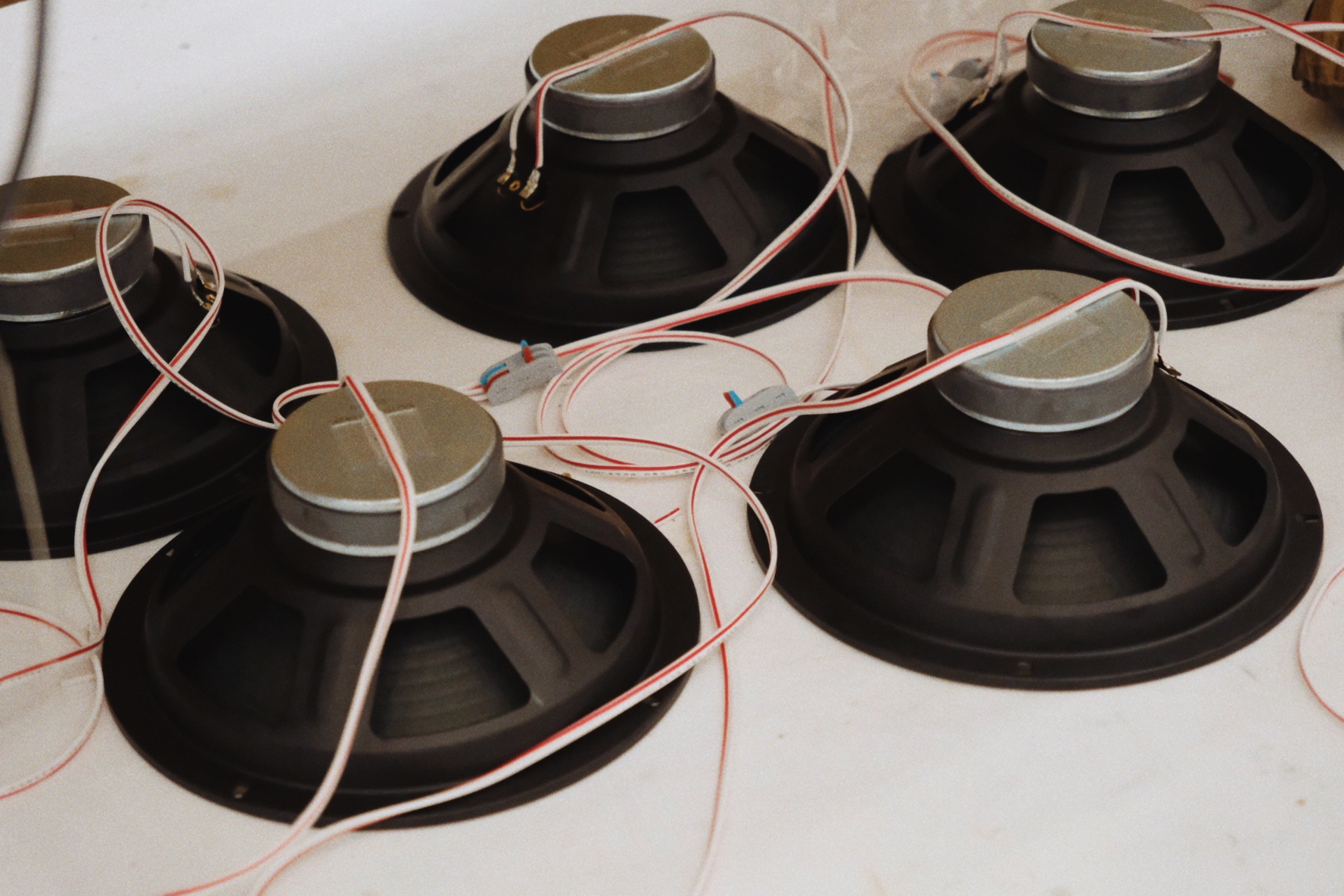 因此,這件作品並不要求觀眾站在某一個固定位置聆聽。觀眾可以在箱體陣列之間行走、停留、貼近,甚至輕輕觸摸紙箱表面,比較箱體內部與外部聲音的差別,感受聲音如何讓紙板發生細微震動。當觀眾的聽覺、觸覺和移動加入其中,身體也成為這個迴路的一部分。聲音在「聲 - 空間(盒子) - 聲 - 空間(紙箱亭) - 聲 - 空間(外部空間)」的嵌套結構中不斷被重寫。
作品名稱中的「流」,同時指向物流、貨物流、資訊流,也指聲音在空間中的流動;「聲部」則來自音樂中的概念,意味著不同的聲音線條。8 個紙箱如同 8 個聲部,各自發聲,又共同組成一個整體。這個整體並不是傳統意義上的音樂,而是一片由物流現場聲音重新組成的聲學地形。作品嘗試把物流系統中不斷流動的聲音重新放回紙箱之中,讓材料、機器、空間和身體之間形成持續的共振迴路。
《流 聲 部》關注的是一個通常被效率、速度和自動化所定義的系統背後,那些平時未必被注意到的聲音、材料、機械運動與人的勞動。它不是簡單地再現一個物流園,而是把物流園的聲音經驗轉化成一個可以進入、可以觸摸、可以停留的空間,邀請觀眾暫時放慢腳步,重新聆聽一個我們非常熟悉、卻未必真正細聽過的系統。
2026 年 5 月聲音採樣於京東集團東莞「亞洲一號」智能物流園。
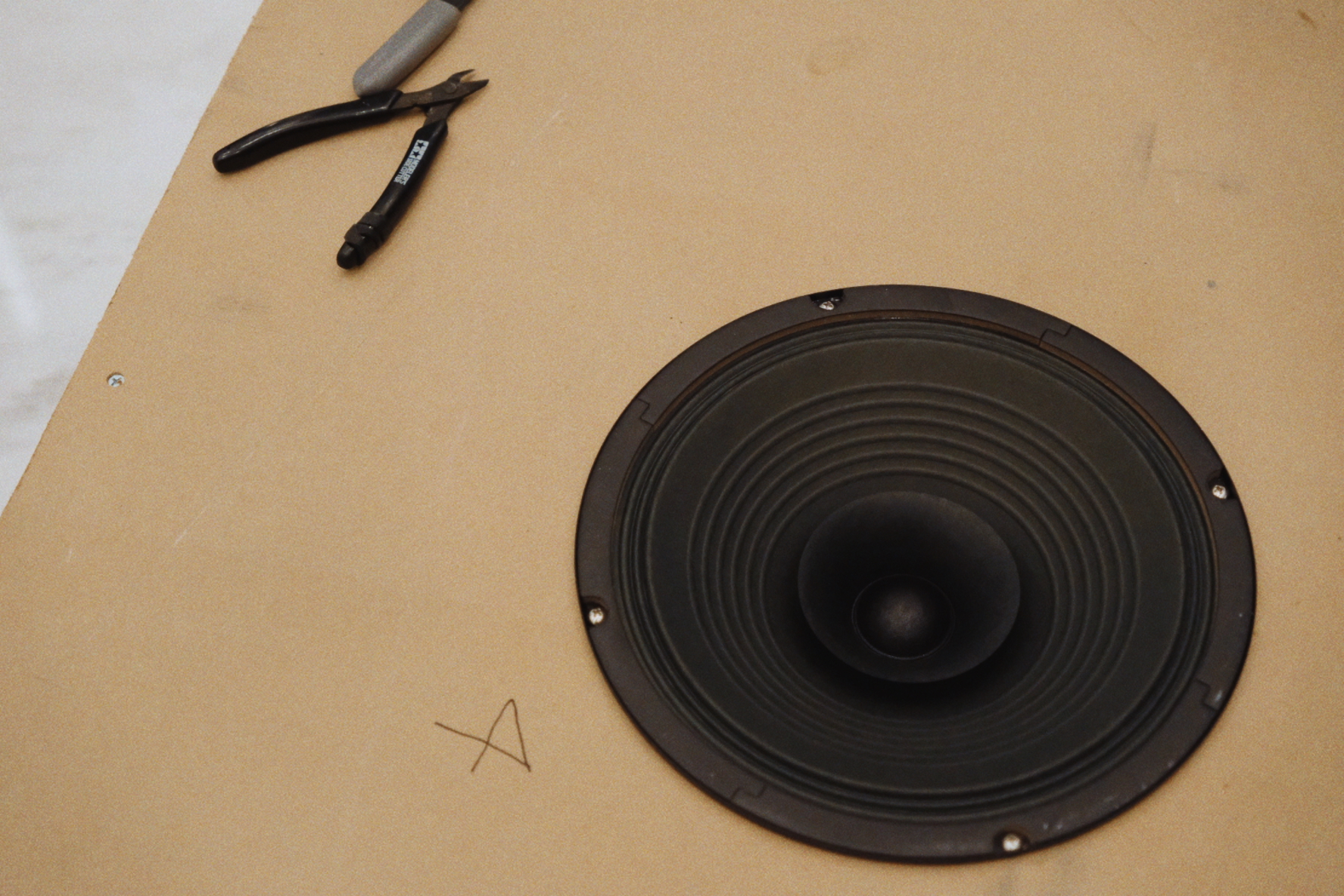 Department of Sonic Flow is a time-based spatial sound installation composed of eight cardboard box units distributed throughout the space. Each box contains a loudspeaker, controlled in real time by a Max/MSP program to form an eight-channel sound generation system. The sound does not come from a single fixed speaker; instead, it moves, disperses, responds, and loops among the boxes, creating an acoustic terrain that visitors can enter, approach, and perceive through the body.
The source materials were sampled on site at JD.com's Dongguan Asia No. 1 Intelligent Logistics Park. The recordings include conveyor lines, sorting, loading and unloading, packing, the movement of goods, machine operations, announcements, conversations among workers, and the continuing ambience of the logistics park. For the artist, these sounds are not merely industrial noise, but the actual rhythms through which the logistics system operates every day: they come from machines as well as people, from the movement of goods as well as the space itself.
Entering the installation is like stepping into a logistics center that has been compressed, filtered, and reorganized. There are no actual conveyor belts or large machines in the exhibition space, yet the sound reactivates the artist's bodily experience of the site: the force of mechanical operation, the persistent rhythm of sorting, the directional flow of goods, and the traces of people working and communicating within the system. Some sounds seem to pass like packages on a conveyor belt; some suggest machines running continuously in the distance; others become lower, more blurred, and closer to the body after being wrapped by cardboard.
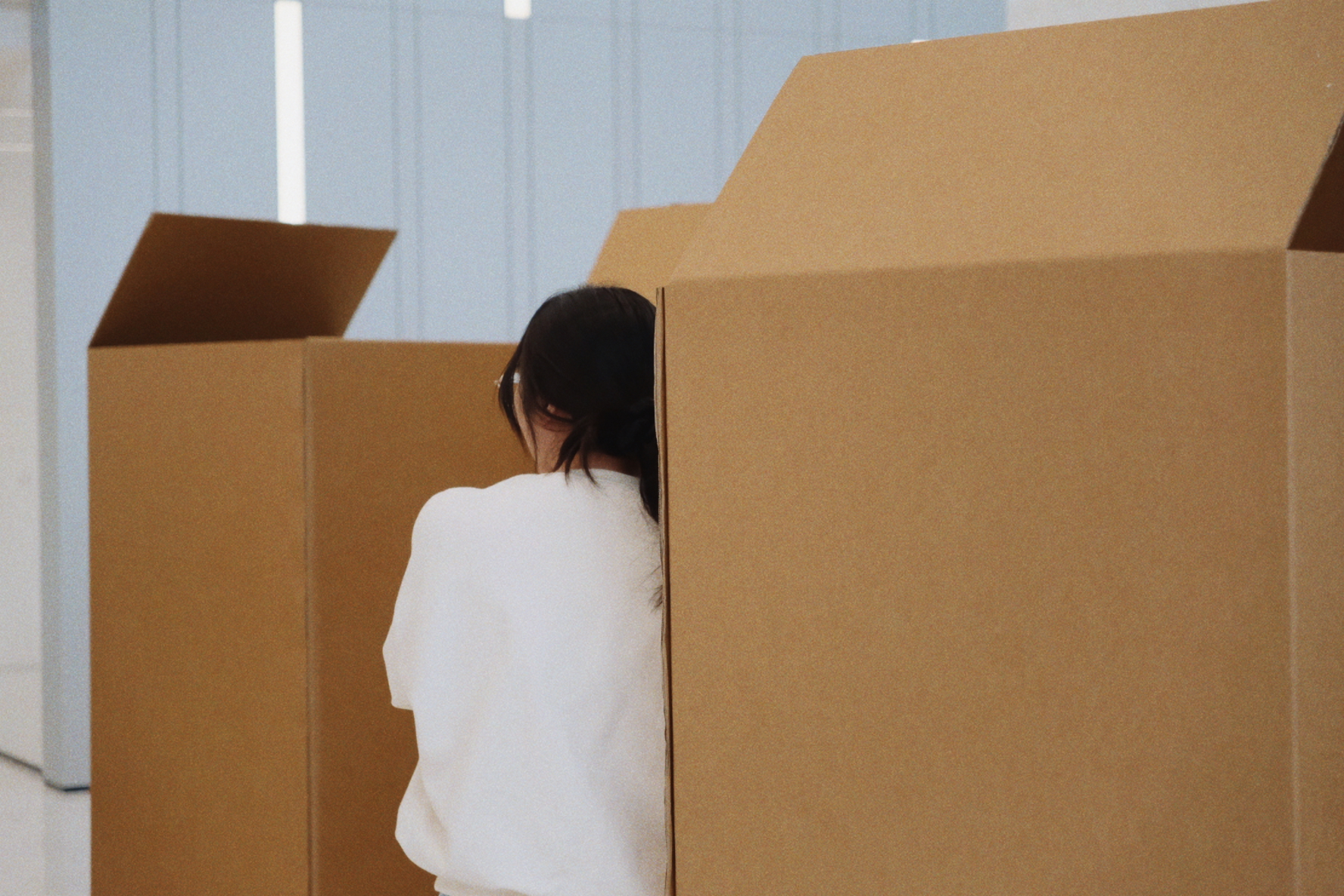
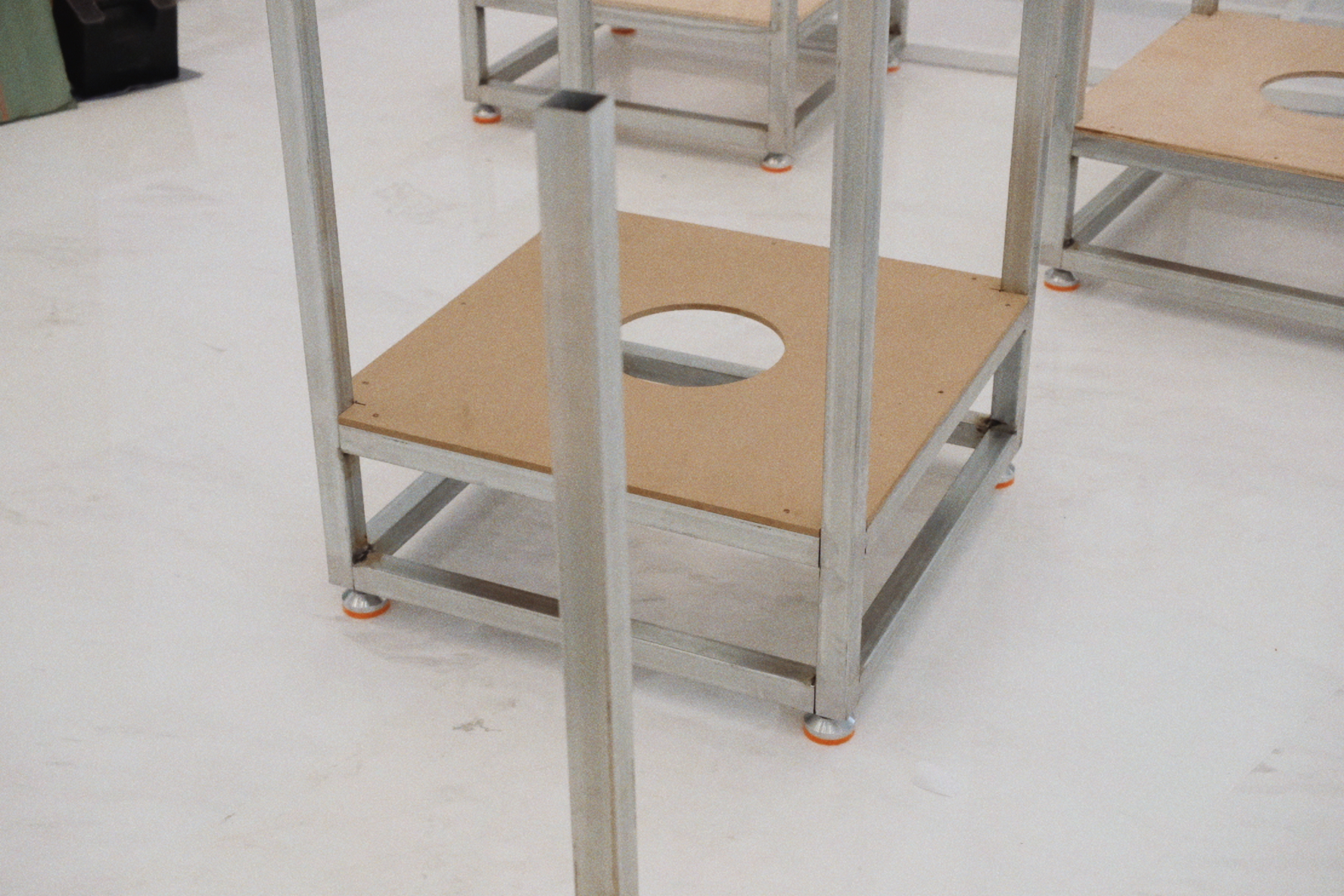 In this work, the cardboard box is both structure and acoustic medium. Within logistics systems, boxes are usually understood as tools for transport, packaging, and classification: temporary, functional, and always ready to be moved, stacked, transferred, or recycled. Yet they also participate deeply in the organization of objects and information. The artist transforms the cardboard box from a shipping container into a medium for reshaping the soundscape. After leaving the loudspeaker, sound does not enter the gallery directly; it first enters the box, where its path and texture are altered by the box's size, thickness, openings, folds, nested forms, and internal volume. The low and mid-frequency mechanical sounds, vibrations, and operational pulses of the logistics site are masked, reflected, filtered, amplified, and subtly resonated through the cardboard body.
As a result, the work does not ask visitors to listen from a fixed position. They may walk among the boxes, pause, move closer, or gently touch the cardboard surface, comparing the sounds heard from inside and outside each box and feeling how sound causes the board to vibrate. When listening, touch, and movement enter the installation, the body becomes part of the circuit. Sound is continuously rewritten through a nested structure of "sound - space (box) - sound - space (cardboard pavilion) - sound - space (external environment)."
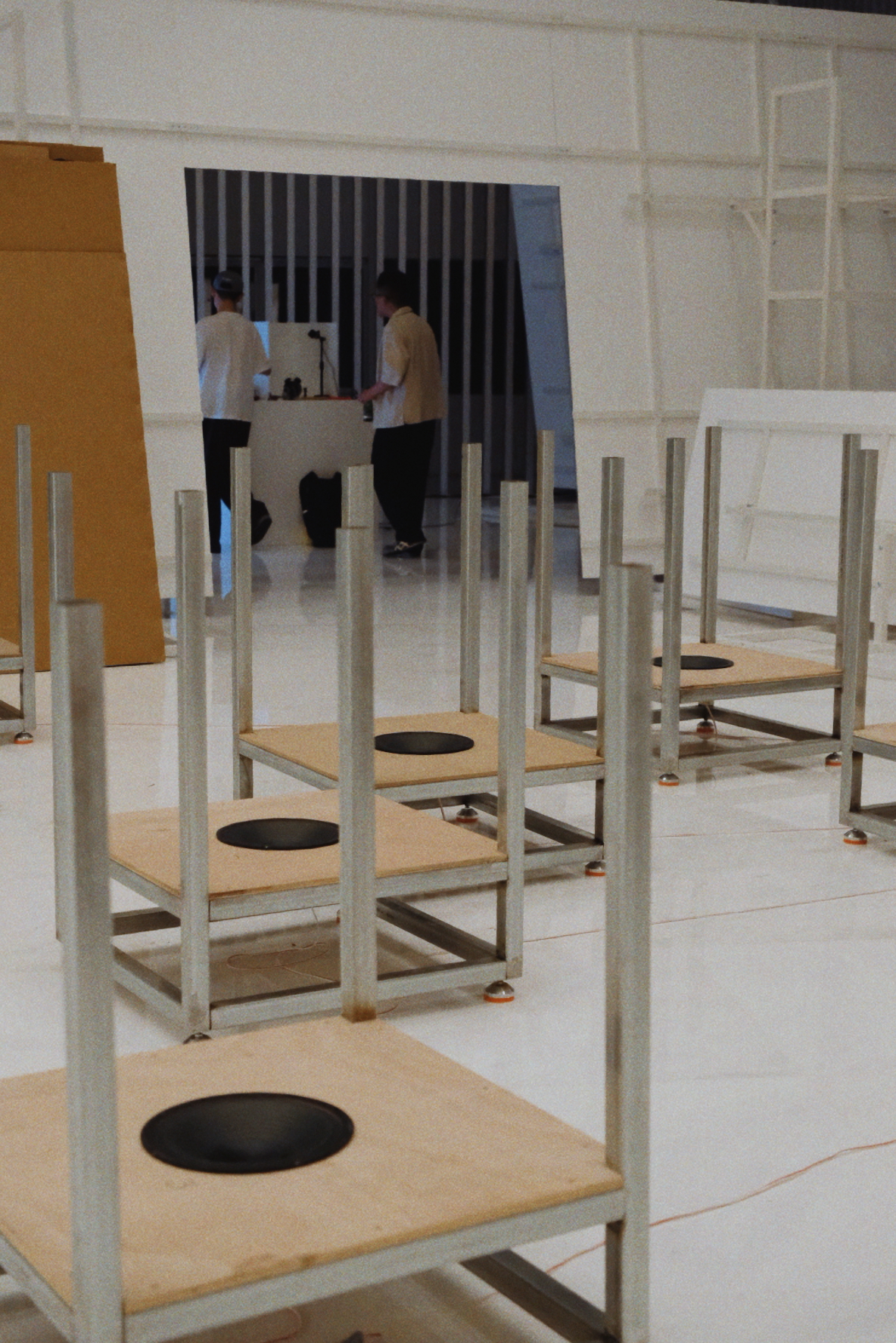 The Chinese title "流 聲 部 / Liú Shēng Bù" links "flow" (流) to logistics, the flow of goods, the flow of information, and the movement of sound through space. "聲部" refers to a musical voice or part, a distinct sonic line within a larger composition. The eight cardboard boxes function like eight voices: each sounds on its own while also forming a collective whole. This whole is not music in the traditional sense, but an acoustic terrain reconstructed from the sounds of a logistics site. The work returns the system's constantly moving sounds to the cardboard box, allowing material, machinery, space, and body to form an ongoing resonant circuit.
Department of Sonic Flow attends to what usually remains behind the image of efficiency, speed, and automation: sound, material, mechanical motion, and human labor. Rather than reproducing a logistics park, the work translates its sonic experience into a space that can be entered, touched, and inhabited, inviting visitors to slow down and listen again to a system that is familiar, yet rarely heard in detail.
Sound sampled at JD.com Dongguan Asia No. 1 Intelligent Logistics Park in May, 2026.
↩︎ back to index